
Standing Practice
Quick Answer
What is standing practice?
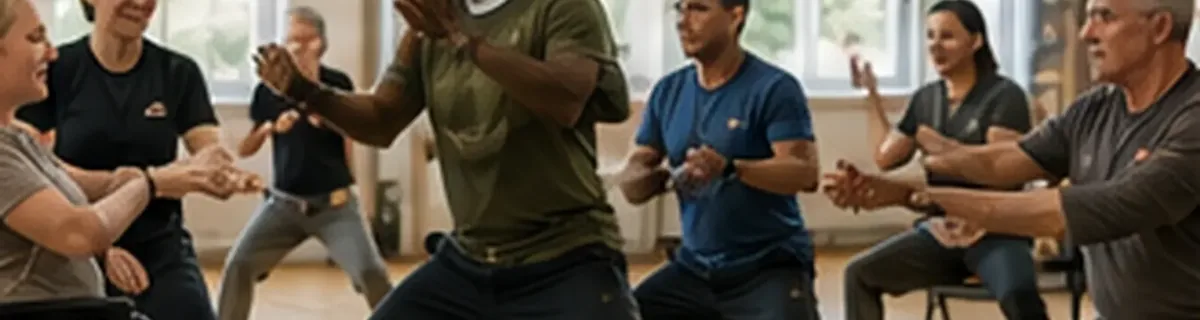
Standing practice uses safe standing or supported standing, small movements, breathing, visualization, and planned rest without treating standing as more valuable than other positions.
Standing deserves its own visible category because many people with MS can practice while standing, with or without support.
Standing Practice May Include
- Natural posture and weight awareness.
- Supported standing near a stable surface when appropriate.
- Small shifts rather than large steps.
- Gentle hand positions or short technique sequences.
- Breathing paired with posture.
- Visualization before or instead of physical movement.
- Planned rest before fatigue becomes overwhelming.
Standing is not a requirement and should not be treated as a higher-value form of practice. It is one available position among several.
Open practice: Accessible Future Class3 min
An inclusive visualization of a class where adaptation and choice are normal.
Practice
Picture standing, seated, wheelchair-based, and other participants receiving options without being singled out. Notice clear cues and respectful pacing.
Open practice: Adapted Closing Gesture2 min
A visualization for choosing an accessible, respectful way to close practice.
Practice
Picture a bow, nod, hand position, breath, or other accessible closing gesture. Choose the version that fits your position and tradition.
Open practice: Adapted Success5 min
A problem-solving visualization for preserving a technique’s principle through an accessible adaptation.
Practice
Choose one practice that usually feels difficult. Picture a smaller, seated, supported, or mental version that still teaches the same principle.
Open practice: Arrival Breath2 min
A brief arrival practice that uses three natural breaths to settle attention in the present.
Practice
Notice where the body is supported. Breathe in naturally. Breathe out without forcing. Repeat for three comfortable breaths, noticing one detail in the room after each exhale.
Open practice: Breath and Posture3 min
A gentle posture-awareness practice that pairs breathing with reduced effort.
Practice
On an inhale, imagine or allow the spine to lengthen slightly. On the exhale, soften unnecessary effort. Repeat three times without forcing position.
Open practice: Breath With Appreciation4 min
A gentle reflection practice that connects breathing with one source of support.
Practice
Choose one person, object, place, or ability that supports you today. Breathe naturally for three breaths while holding that idea without forcing a positive mood.
Open practice: Breath-Led Sequence3 min
A visualization practice that coordinates imagined movement with comfortable breathing.
Practice
Imagine preparing on an inhale and beginning a simple movement on an easy exhale. Do not hold the breath. Repeat three times.
Open practice: Closing Breath1 min
A simple closing ritual that marks the end of practice without evaluation.
Practice
Notice what position you are in. Take one comfortable breath and acknowledge that the practice is complete. No evaluation is required.
Open practice: Confident Entry4 min
A confidence-building visualization for beginning practice calmly and without performance pressure.
Practice
Picture arriving, choosing an appropriate position, and starting with one manageable action. Notice calm preparation rather than performance.
Open practice: Create a Calm Practice Space2 min
A visualization for designing an accessible practice environment that feels calm and supportive.
Practice
Picture lighting, space, support, temperature, and sound that would help you practice. Notice one detail at a time for two minutes.
Open practice: Easy Longer Exhale2 min
A gentle breathing option for exploring a slightly longer exhale without strain.
Practice
Breathe in comfortably. Let the exhale continue a little longer only if it feels natural. Repeat three times. Return to ordinary breathing immediately if uncomfortable.
Open practice: Energy Check-In1 min
A nonjudgmental check-in for matching today’s practice to current energy.
Practice
For three breaths, notice whether energy feels low, moderate, changing, or hard to describe. Choose the next practice based on that information rather than expectation.
Open practice: Five-Senses Focus4 min
A grounding practice that uses the senses to reconnect attention with the immediate environment.
Practice
Notice one thing you can see or imagine, one sound, one physical contact point, one scent or remembered scent, and one taste or neutral mouth sensation. Breathe naturally throughout.
Open practice: Form Fragment4 min
A short visualization practice for learning or revisiting a small section of a form.
Practice
Choose only two or three movements. Imagine the sequence slowly, including transitions and pauses. Repeat twice.
Open practice: Gentle Knee Softening4 min
A supported standing practice for exploring a very small knee bend when appropriate.
Practice
With stable support, soften the knees a small amount and return to comfortable standing. Repeat up to five times. Do not use if unsafe.
Open practice: Hand-on-Center Focus4 min
A tactile or imagined attention practice using one comfortable hand position as an anchor.
Practice
Place a hand where comfortable, or imagine doing so. Notice the movement or sensation of breathing for five ordinary breaths.
Open practice: Hands and Breath4 min
A coordinated breath-and-hand practice that gives breathing a simple visual rhythm.
Practice
Rest or place the hands comfortably. As you breathe in, gently open the fingers if that is comfortable. As you breathe out, let the fingers soften. Repeat five times or visualize the action.
Open practice: Hear a Helpful Cue3 min
A mental rehearsal that uses one respectful cue to support focus and timing.
Practice
Choose a short cue such as “breathe,” “steady,” or “small movement.” Imagine hearing it clearly before each of three mental repetitions.
Open practice: Heel and Toe Awareness2 min
A foot-awareness practice for noticing heel and forefoot contact while both feet remain grounded.
Practice
While safely supported, notice the heels, then the front of the feet. Keep both feet down. Alternate attention five times.
Open practice: Inclusive Instructor Language5 min
A teaching visualization for practicing language that offers options without judgment.
Practice
Imagine an instructor saying, “Choose the version that fits today,” and offering several options without judgment.
Open practice: Jaw and Breath Check3 min
A brief awareness practice for noticing whether the jaw can soften during exhalation.
Practice
Breathe normally. On each exhale, notice whether the jaw can soften. Do not force the mouth open. Repeat for one minute.
Open practice: Name the Moment3 min
A quick mindfulness practice that anchors attention in the present with two simple words.
Practice
On the inhale, silently say “Here.” On the exhale, silently say “Now.” Repeat for five breaths or use different neutral words that feel appropriate.
Open practice: Observe a Technique2 min
An observation practice for identifying technique details and imagining a version that fits you.
Practice
Picture another practitioner performing one movement. Notice posture, timing, direction, and recovery. Then imagine one adapted version for yourself.
Open practice: One Technique in the Mind4 min
A focused visualization practice for rehearsing one familiar technique from setup through return.
Practice
Choose one familiar hand movement, guard position, or sequence. Imagine the setup, movement, and return slowly three times.
Open practice: One-Hand Reach3 min
A supported standing practice for exploring a short, controlled reach with one hand.
Practice
With support nearby, extend one hand a short distance and return. Repeat three times, then switch hands if appropriate.
Open practice: One-Minute Reset3 min
A one-minute attention reset built around ordinary, unforced breathing.
Practice
Settle into a safe position. For one minute, breathe normally and notice the exhale. No special count or performance is required.
Open practice: Pause Before Movement4 min
A preparation practice that places one calm breath before movement or visualization.
Practice
Choose a small safe movement or imagined movement. Take one natural breath first, then begin on the next comfortable exhale. Repeat up to five times.
Open practice: Personal Practice Space3 min
A spatial-awareness visualization for planning a clear, comfortable, and predictable practice area.
Practice
Imagine enough room for your body, equipment, supports, and another person if needed. Picture the space remaining clear and predictable.
Open practice: Quiet Center1 min
A short centering practice that returns attention to one calm, steady word.
Practice
Choose one word such as calm, steady, or present. Breathe naturally for one minute and return attention to that word whenever the mind wanders.
Open practice: Rest as Practice2 min
A mental practice that treats deliberate rest as part of pacing, discipline, and training.
Practice
Picture completing one brief action, pausing without guilt, and beginning again only if appropriate. Repeat the sequence mentally three times.
Open practice: Return to Basics4 min
A focused mental practice that reconnects attention with one foundational martial arts principle.
Practice
Choose breathing, stance, guard, attention, or timing. Imagine practicing only that foundation for two minutes.
Open practice: Shoulder Softening3 min
A gentle breath-led practice for noticing and easing unnecessary shoulder tension.
Practice
Breathe in comfortably. As you breathe out, let the shoulders settle only as far as feels easy. Repeat four times without pushing or holding the breath.
Open practice: Small Forward-and-Back Awareness3 min
A supported balance-awareness practice for exploring tiny forward-and-back weight changes without stepping.
Practice
With support available, notice a slight forward shift and return, then a slight backward shift and return. Keep the movement very small.
Open practice: Small Motion, Full Attention5 min
A detailed visualization for exploring the full structure of one very small movement.
Practice
Imagine one finger, hand, head, or shoulder movement. Notice beginning, direction, stopping point, and return.
Open practice: Small Side Shift4 min
A small supported balance practice for exploring side-to-side weight transfer within a safe range.
Practice
With support available, move weight slightly toward one side and return to center. Repeat on the other side. Keep the range small and stop if balance feels uncertain.
Open practice: Soft-Gaze Breathing2 min
A low-visual-effort breathing practice for staying present without staring.
Practice
If comfortable, let the eyes rest on one safe point without staring. Breathe naturally for four breaths. Close the eyes only if that is safe and comfortable.
Open practice: Sound Between Breaths1 min
A listening practice that uses nearby and distant sounds to settle attention.
Practice
Listen for the farthest sound you can notice, then the nearest. Breathe normally and alternate attention between them for one minute.
Open practice: Standing Breath With Hands5 min
A standing breath-and-hand practice for coordinating small movement with inhalation and exhalation.
Practice
Let the hands rise slightly on an inhale and settle on an exhale, or visualize the movement. Repeat four times.
Open practice: Standing Centerline Awareness2 min
A standing attention practice organized around an imagined centerline and available support.
Practice
Imagine a vertical line through the center of the body. Keep attention on that line for three breaths while using support as needed.
Open practice: Standing Finish and Rest4 min
A pacing practice for ending standing work before fatigue becomes exhaustion.
Practice
Complete one safe standing action, return to neutral, and sit or rest before exhaustion. Notice that choosing rest is part of the practice.
Open practice: Standing Guard Position5 min
A standing or supported-standing practice for finding a relaxed, usable guard position.
Practice
Set the feet in a comfortable position. Raise the hands only as far as appropriate. Hold for two breaths, relax, and repeat three times.
Open practice: Standing Hand Pattern2 min
A standing coordination practice built around a short two-hand pattern.
Practice
Choose two simple hand positions. Move slowly from the first to the second and return. Repeat four times while keeping the lower body steady.
Open practice: Standing or Seated Choice5 min
A choice-based practice that treats standing, sitting, and changing position as equally valid.
Practice
Begin standing only if appropriate. After one movement, deliberately choose whether to continue standing or switch to seated practice. Treat either choice as successful.
Open practice: Standing Posture Reset4 min
A breath-led standing reset for finding length while softening unnecessary effort.
Practice
Stand in a safe position. On an inhale, imagine length. On an exhale, soften the shoulders and knees without collapsing. Repeat three times.
Open practice: Step Preparation Imagery3 min
A step-preparation visualization that explores intention and weight awareness without requiring a step.
Practice
Shift attention toward one foot and imagine a small step. A physical step is optional. Return attention to center and repeat on the other side.
Open practice: Support Without Taking Over4 min
A consent-centered visualization of assistance that protects choice and independence.
Practice
Picture a caregiver or partner offering an option, waiting for consent, and helping only as requested.
Open practice: Supported Balance Image5 min
A safety-centered visualization that makes support part of balance practice from the beginning.
Practice
Picture the chair, wall, wheelchair, bed, assistant, or other support that would be available. Imagine using it without embarrassment or hurry.
Open practice: Supported Breath Awareness2 min
A grounding breath practice focused on the surfaces and supports holding the body.
Practice
Identify two or three support points such as feet, chair, wheelchair, pillow, bed, hands, or wall. Breathe normally and notice those points for five breaths.
Open practice: Supported Look and Return5 min
A supported orientation practice for turning the eyes, head, or upper body and returning to center.
Practice
Hold stable support if needed. Turn the eyes or head slightly toward one side, return to center, then repeat to the other side. Keep the movement comfortable.
Open practice: Supported Weight Awareness3 min
A supported standing-awareness practice for noticing foot contact and weight without unnecessary shifting.
Practice
Stand only if appropriate, with a stable support available. Notice contact through both feet without shifting farther than comfortable. Take three ordinary breaths.
Open practice: Temperature Awareness2 min
A body-and-environment check for deciding whether movement should be adapted, shortened, or postponed.
Practice
Breathe naturally and notice whether the environment or body feels warm, cool, or neutral. Use that information to decide whether to shorten, adapt, or postpone movement.
Open practice: Three-Breath Count1 min
A simple counting practice for steadying attention without changing the natural breath.
Practice
Silently count one after the first exhale, two after the second, and three after the third. Begin again if attention wanders.
Open practice: Timing Beat2 min
A rhythm-based mental practice for organizing technique into prepare, move, and return.
Practice
Imagine a slow three-count: prepare, move, return. Repeat the count with one mental technique five times.
Open practice: Trace the Hand Path5 min
A movement-imagery practice for following one hand path without requiring physical motion.
Practice
Imagine the hand beginning at rest, traveling through one simple path, and returning. Repeat five times. Add physical movement only if appropriate.
Open practice: Visualize a Stable Stance3 min
A mental rehearsal for finding stability and support in the position that fits today.
Practice
Picture the body supported in the position you use today. Imagine balanced attention rather than perfect symmetry. Hold the image for three natural breaths.
Frequently Asked Questions
Does standing practice require unsupported balance?
No. Standing practice may use appropriate support and small, controlled movements.
Is standing practice better than seated practice?
No. They are different access options. The meaningful practice is the one that fits the person safely today.
Can I switch from standing to seated practice during a session?
Yes. Adapting position is part of practice, not a failure.