
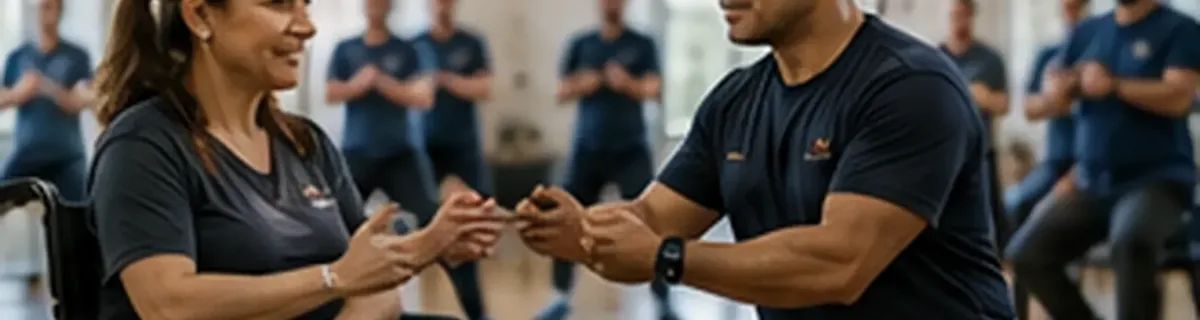
Adaptive Martial Arts
Quick Answer
Can martial arts be adapted for MS?
Yes. Practice can be adapted through standing, supported standing, seated, wheelchair-based, reclined, bedbound, breathing-focused, visualization-based, and respectful instruction.
Adaptive martial arts means adjusting practice to the person instead of forcing the person into a rigid training model.
For someone living with MS, symptoms can change from day to day. Adaptive practice may include seated training, supported movement, smaller motions, fewer repetitions, more rest, breathing work, visualization, or a focus on philosophy and awareness.
Ways Practice Can Be Adapted
Seated Practice
Hand movement, breathing, posture, attention, and timing can be practiced from a chair or wheelchair.
Supported Movement
Walls, chairs, mobility equipment, caregivers, or instructors may help create safer practice conditions.
Mental Practice
Visualization helps preserve sequence, attention, rhythm, and confidence when fatigue limits movement.
Connection to Visualization
Adaptive arts and visualization belong together. When movement is limited, mental rehearsal can maintain connection to skill. When movement is possible, visualization can prepare the body and mind before practice begins.
Pair Movement With Mental Practice
Visualization can help keep martial arts practice meaningful even when physical practice must be adapted.
Frequently Asked Questions
What is adaptive martial arts?
Adaptive martial arts modifies training so people can participate according to their abilities, symptoms, energy, and safety needs.
Can adaptive practice include very small movements?
Yes. Small, slow, seated, supported, or mentally rehearsed movement can still be meaningful.
Does adaptive mean easier?
Not necessarily. Adaptive means appropriate, respectful, and sustainable for the person practicing.