
About MA4MS

About MA4MS
Founded in 2006, MA4MS carries a mission of adaptive martial arts, MS-aware movement, visualization, and human resilience.
About MA4MS
MA4MS was founded in 2006 from a simple but powerful idea: martial arts practice does not have to disappear when multiple sclerosis changes the body. Martial arts is often judged by visible movement: kicks, punches, stances, tests, belts, and sparring. But underneath those visible parts are deeper principles: attention, breath, memory, timing, restraint, courage, and persistence. Those principles can still be practiced when movement has to change.
Author David Ellinger brings lived experience to MA4MS as a martial artist, technologist, web developer, and person living with multiple sclerosis. That matters because this project is not written from a detached distance. It comes from the reality of adapting discipline and identity after the body no longer follows the same rules. The tone is meant to be honest, compassionate, and authoritative without pretending that MS is easy.
MA4MS does not claim that martial arts cures MS. It does not claim that visualization replaces medical care, physical therapy, medication, or professional guidance. Instead, it explores how martial arts-inspired practice can be adapted into safer, smaller, more accessible forms. A person may practice seated hand movement, rehearse a kata mentally, coordinate breathing with posture, or use visualization to remain connected to movement on a difficult day.
The mission of MA4MS is to make adaptive martial arts concepts understandable, respectful, and accessible for people who may not be able to train in a traditional way. That includes people who practice from a wheelchair, from a chair, from bed, with support, with limited range of motion, or through mental imagery when physical practice is not possible. The purpose is not to measure people against old standards of strength or speed. The purpose is to preserve discipline, attention, courage, and self-respect in a form that matches real life with MS.
Founded in 2006, MA4MS carries a long-standing purpose: to show that adaptive practice is not a lesser version of martial arts. It is martial arts filtered through reality, patience, and intelligence. For someone living with MS, a meaningful practice may look like a seated block, a single breath, a careful posture check, a visualized kata, or a short routine performed with support. Those actions may appear small from the outside, but they can represent strength, identity, and refusal to disappear.
The mission is also educational. MA4MS exists to help readers, caregivers, and instructors understand the difference between encouragement and pressure. Encouragement respects fatigue, heat sensitivity, balance problems, weakness, pain, and changing ability. Pressure ignores those realities. MA4MS aims to encourage without shaming, adapt without minimizing, and teach without pretending to replace medical care.
The MA4MS approach is supported by careful reading of external resources, not by exaggerated promises. The National MS Society describes exercise and physical activity as playing a crucial role in MS management. Mayo Clinic also discusses exercise in relation to strength, balance, muscle tone, and coordination. Those ideas do not mean every person with MS should train the same way. They mean movement deserves respect, adaptation, medical awareness, and practical judgment.
The emotional mission is just as important as the physical one. MS can challenge independence, self-image, confidence, and connection to activities that once felt central to a person’s identity. MA4MS offers a different message: adaptation is not defeat. A changed practice can still be a real practice. A seated drill can still be martial arts. A mental form can still carry discipline. A slow breath can still be a beginning.
MA4MS is powered by The Edge of Eternity Networks, giving the project a technical foundation for accessibility, speed, structure, search visibility, and long-term maintenance. The purpose is to make adaptive martial arts and MS-aware movement easier to find, easier to understand, and easier to share.
Helpful Internal Paths
MS & Movement
Learn how pacing, fatigue awareness, breathing, and body awareness shape adaptive movement.
Adaptive Training
Explore seated, supported, slowed, and visualized martial arts practice.
Visualization
Use mental rehearsal to stay connected to movement when physical practice is limited.
Resources
Review external references and educational resources supporting the MA4MS approach.
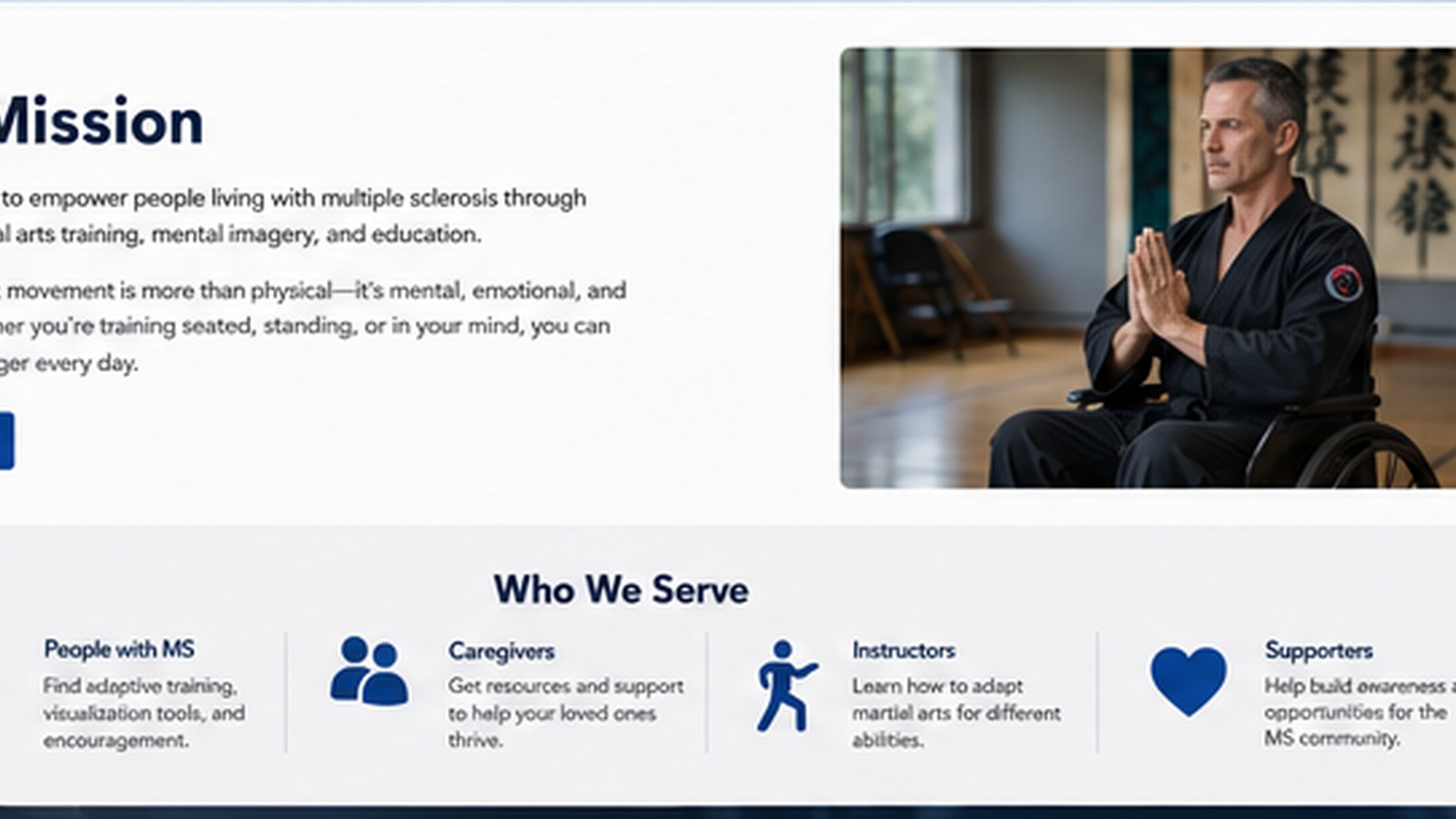
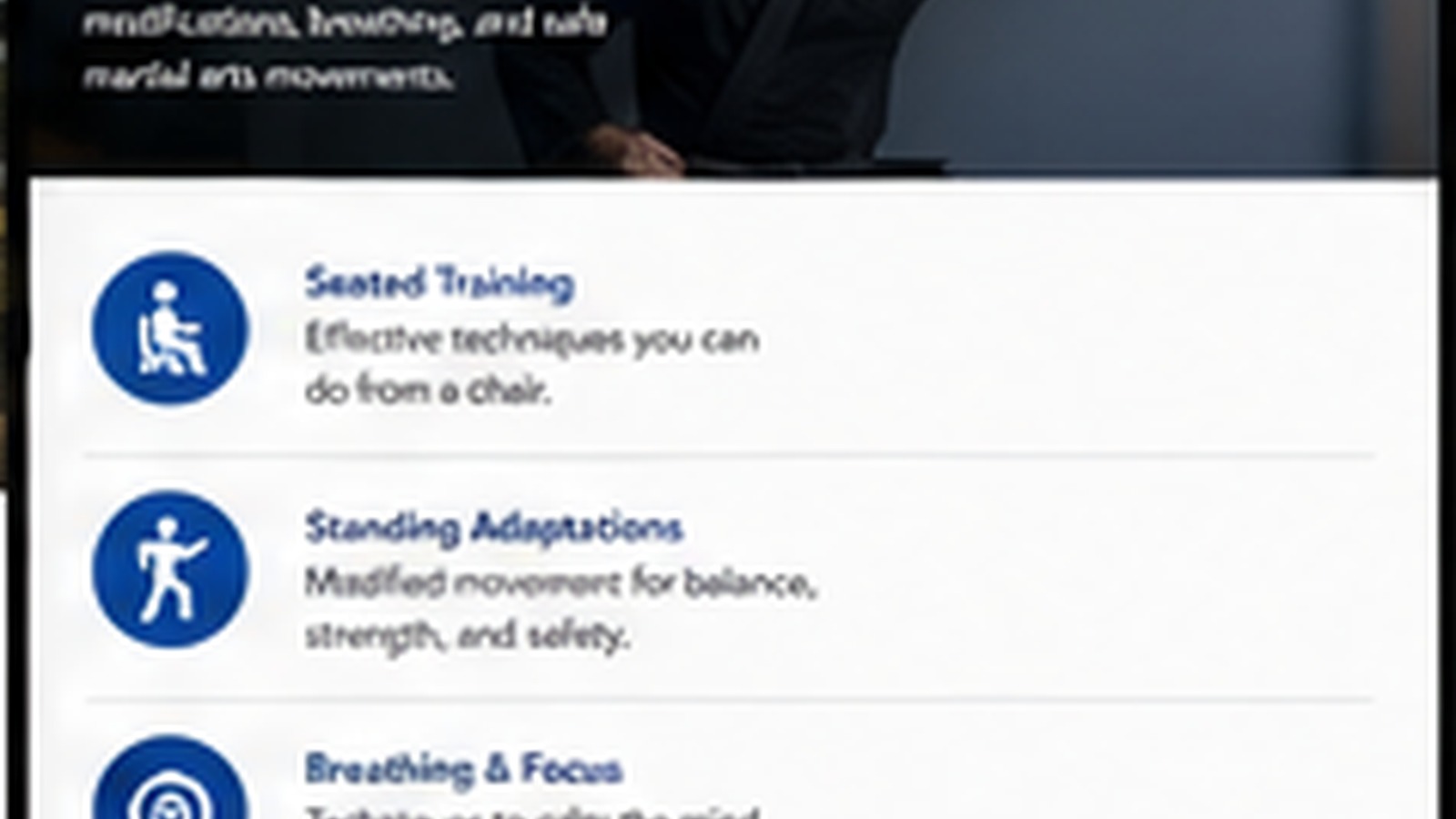
Relevant Visual Examples
These photorealistic-style visual examples are included to help visitors understand the MA4MS themes of adaptive movement, seated martial arts practice, visualization, and safe training. They are educational examples, not medical instruction.
About the Author
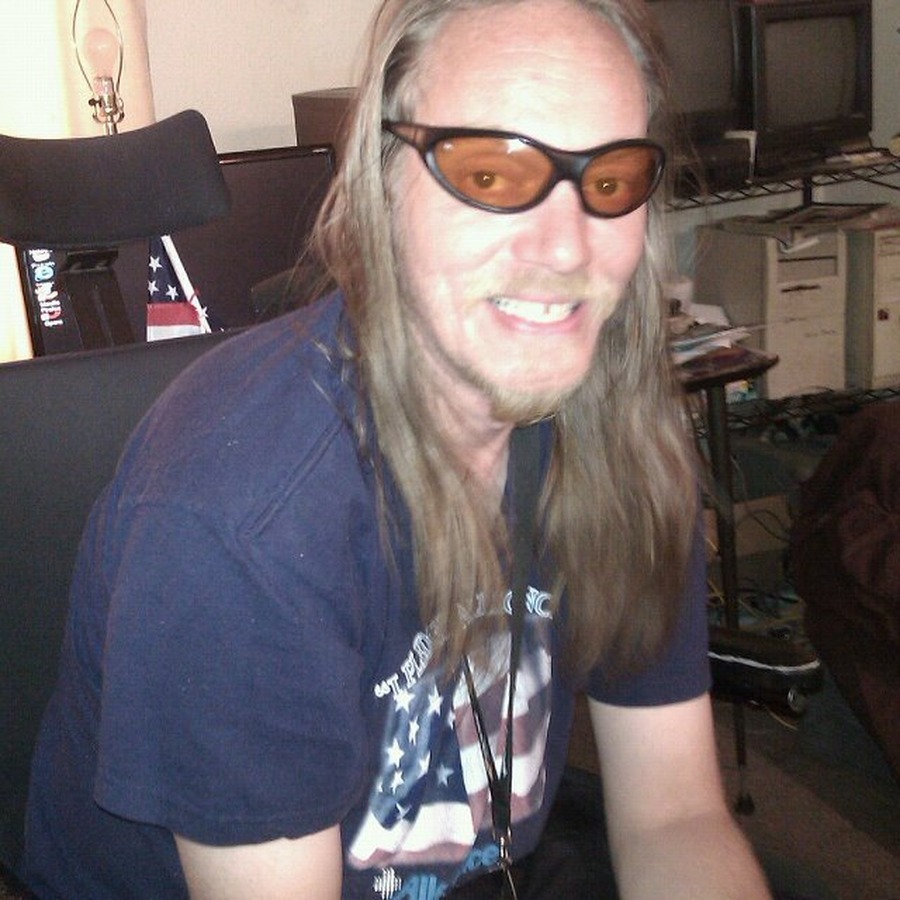
Author David Ellinger created MA4MS from lived experience as a martial artist, technologist, web developer, and person living with multiple sclerosis. His approach combines adaptive practice, mental imagery, technical creativity, and respect for the physical realities of MS.
MA4MS is powered by The Edge of Eternity Networks, supporting the technical foundation, website presence, accessibility direction, and long-term educational growth of this project.
Research References and External Resources
The external links below are provided as dofollow educational resources. They support the MA4MS approach to MS-aware movement, balance, motor imagery, rehabilitation, fatigue awareness, and adaptive practice.
National MS Society: Exercise and Physical Activity
“Exercise and physical activity play a crucial role in the management of MS.”
Supports adapted movement, pacing, and safe physical activity.
Mayo Clinic: Exercise and Multiple Sclerosis
“Regular aerobic exercise can increase strength and balance.”
Supports the focus on balance, strength, and medical guidance.
Mayo Clinic: MS Diagnosis and Treatment
“Regular exercise can help improve your strength, muscle tone, balance and coordination.”
Supports movement, coordination, and adapted activity.
PubMed: Effectiveness of Motor Imagery in Patients with Multiple Sclerosis
“MI and its combination with relaxation exercises have been shown to be effective.”
Supports mental imagery and relaxation as research-informed educational topics.
PMC: Motor Imagery on Motor Recovery in Multiple Sclerosis
“Findings showed that pwMS using MI had significant improvements.”
Supports careful discussion of motor imagery for MS.
PMC: Neuroplasticity and Motor Rehabilitation in Multiple Sclerosis
“Motor rehabilitation is routinely used in clinical practice.”
Supports discussion of rehabilitation, repetition, and neuroplasticity.
PMC: Exercise and Lifestyle Physical Activity Recommendations for People with MS
“Wellness is a priority for people with multiple sclerosis.”
Supports a broader wellness and physical activity framework.
Safety Reminder
Educational content only. MA4MS does not provide medical advice, diagnosis, treatment, physical therapy, or emergency guidance. Anyone living with multiple sclerosis should speak with a qualified healthcare professional before starting or changing exercise, martial arts practice, breathing work, visualization routines, or rehabilitation-related activity.