
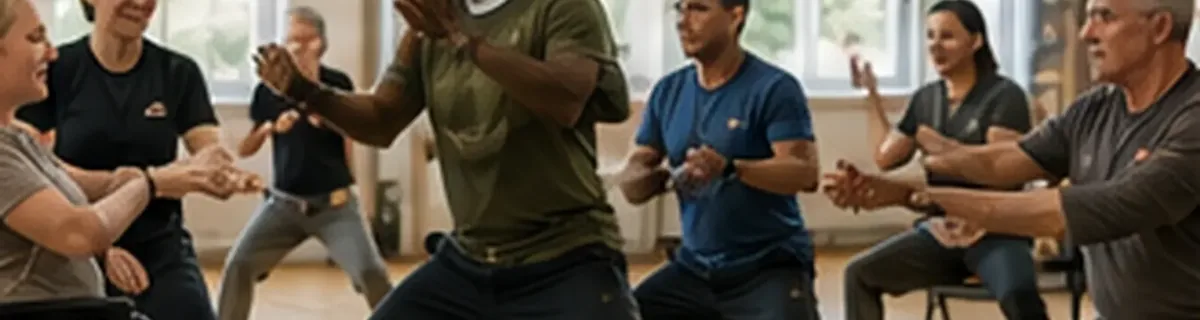
Confidence Through Practice
Quick Answer
How can martial arts support confidence with MS?
Adaptive practice can help rebuild confidence by recognizing what remains possible today instead of measuring worth by what the body used to do.
MS can make people feel unseen. Practice can help rebuild confidence by showing that growth is still possible.
Confidence is not measured by how far someone can walk, how high they can kick, or whether they can stand unaided. Confidence can grow through breathing, visualization, observation, safe movement, and the choice to keep practicing in a way that fits today.
Confidence May Grow Through
- Completing a small practice session.
- Using breathing to become calmer and more focused.
- Visualizing movement when physical movement is limited.
- Recognizing what is still possible.
- Adapting without shame.
- Being seen and respected.
MA4MS does not promise medical outcomes. It focuses on dignity, adaptation, participation, and confidence through meaningful practice.
Frequently Asked Questions
How can martial arts help confidence with MS?
Adaptive practice can help people recognize effort, awareness, focus, and growth instead of measuring themselves only by lost abilities.
Does confidence require physical achievement?
No. Confidence can grow through breathing, visualization, observation, consistency, and safe adaptive movement.
Why does MA4MS connect confidence with being seen?
Because MS can make people feel overlooked, and respectful practice can help people reconnect with value, ability, and identity.