
Seated & Supported Practice
Quick Answer
Can martial arts be adapted for MS?
Yes. Practice can be adapted through seated movement, supported movement, smaller motions, rest, pacing, breathing, visualization, and respectful instruction.
Seated & Supported Practice
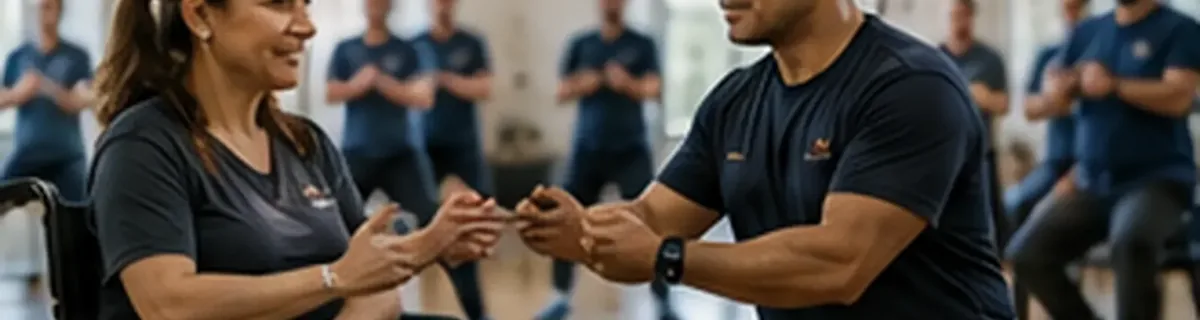
Seated and supported practice helps keep martial arts principles accessible when standing practice is limited, unsafe, exhausting, or not possible.
Practice may include posture, breathing, hand positions, slow upper-body movement, visualization, timing, balance awareness, and instructor-guided adaptation. The purpose is not to imitate every traditional movement. The purpose is to preserve meaningful practice.
Examples of Adaptation
- Practicing hand positions from a stable chair.
- Using smaller ranges of motion.
- Rehearsing footwork mentally instead of physically.
- Practicing breathing before and after movement.
- Using caregiver or instructor support when appropriate.
External Resources
- Multiple Sclerosis Association of America — practical MS information and support.
- National Multiple Sclerosis Society — MS education and wellness resources.
Frequently Asked Questions
Is seated practice still martial arts practice?
Yes. When taught respectfully, seated practice can preserve focus, structure, breathing, timing, hand skills, and mental discipline.
Should someone push through fatigue?
No. MA4MS emphasizes pacing, rest, and respecting the individual person.
Can visualization replace some physical movement?
Visualization can support practice when physical movement is limited, though it should not be presented as a cure or medical treatment.