
Wheelchair-Based Practice
Quick Answer
Can martial arts be adapted for MS?
Yes. Practice can be adapted through standing, supported standing, seated, wheelchair-based, reclined, bedbound, breathing-focused, visualization-based, and respectful instruction.
Wheelchair-Based Practice
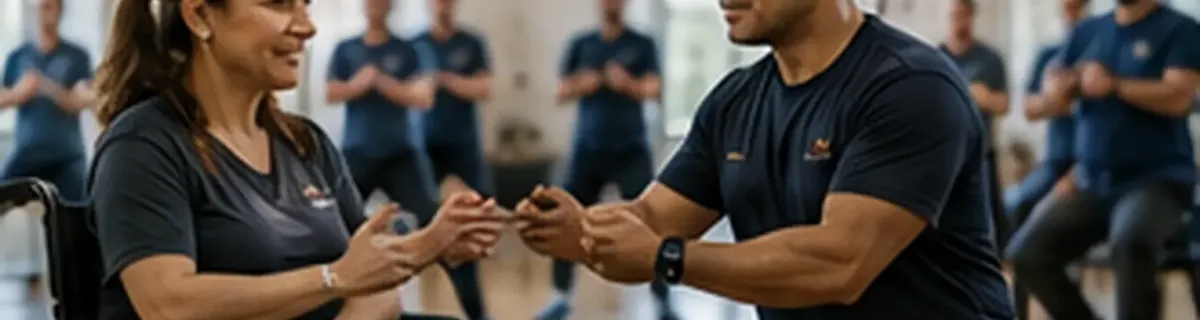
Wheelchair-based practice is not a lesser version of martial arts. It is an adaptive way to continue learning.
Practice may include posture, breathing, hand techniques, focus, timing, observation, visualization, and respectful adaptation. The goal is meaningful participation, not forcing every body into the same format.
Wheelchair-Based Practice May Include
- Breathing and posture awareness.
- Hand and arm techniques when safe.
- Slow forms or partial forms adapted to seated position.
- Visualization of footwork, distance, timing, and movement.
- Observation and self-awareness.
- Confidence-building through consistent practice.
Frequently Asked Questions
Can wheelchair users practice martial arts principles?
Yes. Many martial arts principles can be explored through seated movement, breathing, timing, observation, visualization, and adaptation.
Should instructors mention wheelchair-based options directly?
Yes. Directly naming wheelchair-based practice helps people know they are included.
Is wheelchair-based practice only physical?
No. It can include visualization, breathing, observation, timing, and confidence-building.