
Adaptive Martial Arts Training
Quick Answer
Can martial arts be adapted for MS?
Yes. Practice can be adapted through standing, supported standing, seated, wheelchair-based, reclined, bedbound, breathing-focused, visualization-based, and respectful instruction.
Adaptive Martial Arts Training for MS
Adaptive martial arts training keeps the purpose of practice while changing the method to fit the person living with MS.
This page is designed to replace older adaptive-training content with the current MA4MS structure: clear navigation, a Quick Answer, page-specific metadata, FAQ schema, internal links, external authority references, and a realistic people-centered hero image direction.
What Adaptive Training Can Include
- Seated or supported practice.
- Smaller, slower, or shortened movements.
- Breathing and focus exercises.
- Visualization when physical movement is limited.
- Rest, pacing, and symptom-aware practice.
- Instructor language that protects dignity and confidence.
Realistic Hero Image Direction
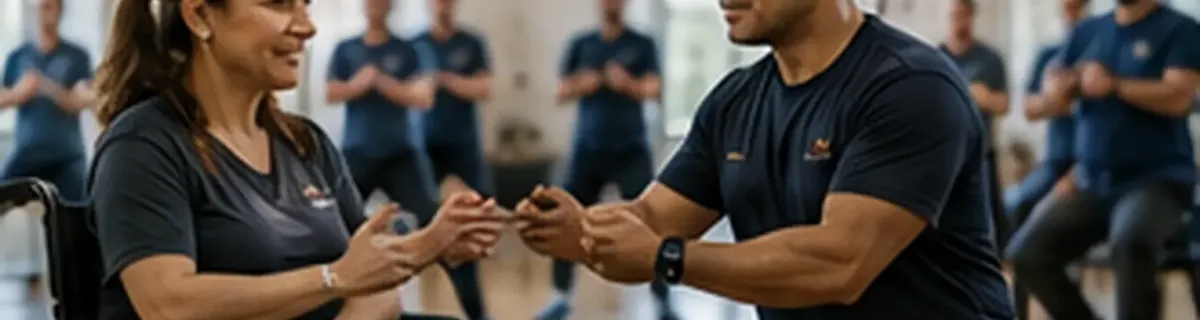
The preferred hero image for this page should look like a realistic photo of a calm, inclusive adaptive martial arts setting with real-looking people, a seated participant, a respectful instructor, natural lighting, and no exaggerated medical or superhero imagery.
Trusted External References
- National Multiple Sclerosis Society — MS education, wellness, symptoms, and support resources.
- Multiple Sclerosis Association of America — practical MS information, programs, and support.
- Can Do MS — wellness education for people with MS and support partners.
Support Adaptive Martial Arts Education
Help MA4MS build accessible resources for people with MS, caregivers, and instructors.
Frequently Asked Questions
Is adaptive martial arts training a medical treatment for MS?
No. MA4MS is educational and does not replace medical care, physical therapy, or professional advice.
Can adaptive training be done from a chair?
Yes. Seated practice can include posture, breathing, hand movement, focus, timing, and visualization.
Should every martial arts technique be adapted the same way?
No. Adaptation should fit the individual person, their safety needs, current symptoms, goals, and support system.